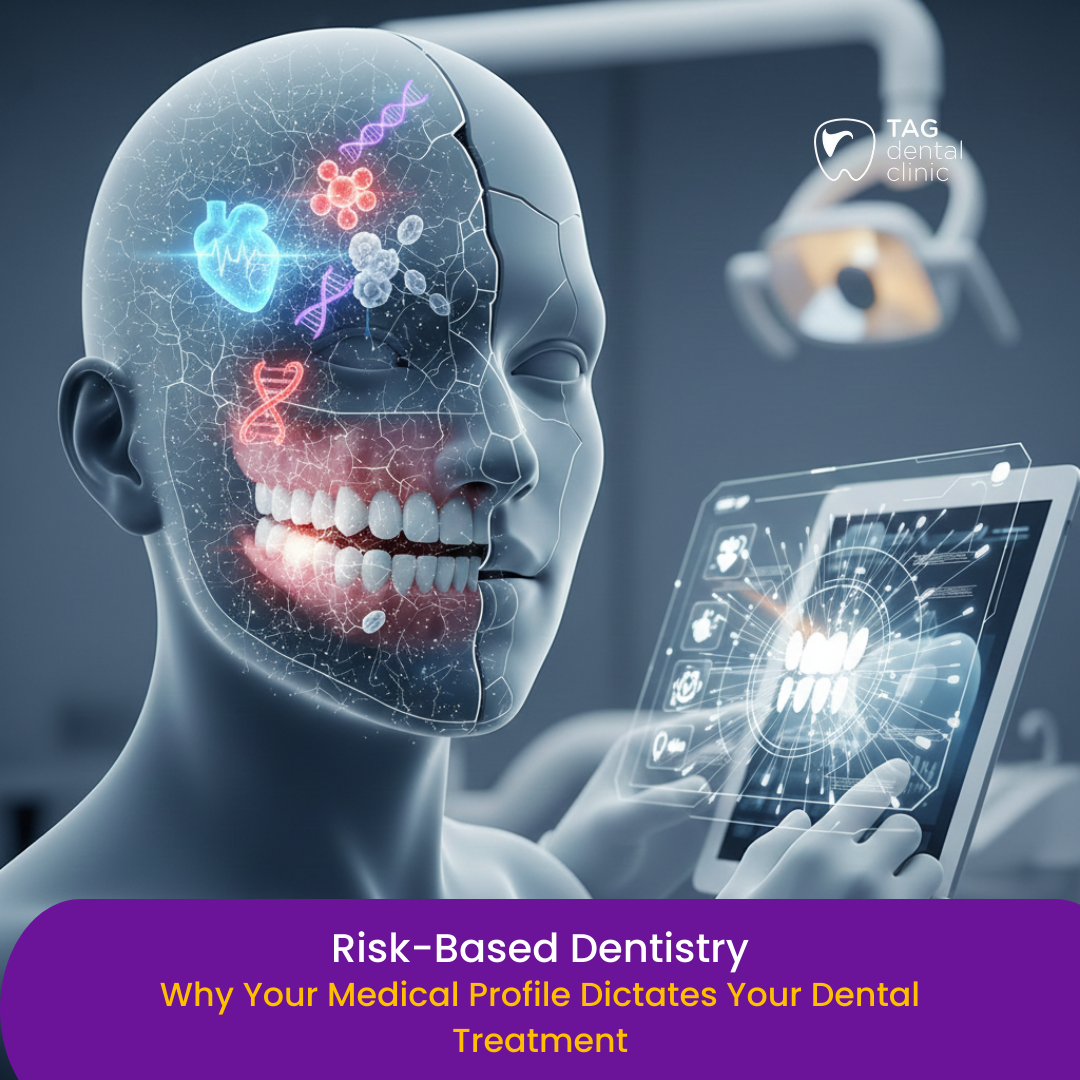
What is risk-based dentistry? Risk-based dentistry is a personalized approach where treatment plans are customized based on a patient’s unique health profile, including medical history, genetics, and lifestyle habits. Instead of a "one-size-fits-all" model, this philosophy recognizes that a patient with diabetes, for example, requires a different clinical strategy for gum health than a patient without systemic issues. This ensures higher success rates and prevents complications before they arise.
Why One-Size-Fits-All Dentistry Fails
At TAG Dental Clinic in Austin 18, JB, we believe that your mouth is the gateway to your body. Treating a tooth in isolation, without considering the person it belongs to, is outdated.
1. How Your Medical History Alters Decisions
Your medical history isn't just "paperwork"—it’s a clinical roadmap.
- The Heart Connection: Patients on certain blood thinners require specific surgical protocols to ensure safe healing during extractions or implants.
- The Medication Factor: Common medications for blood pressure or osteoporosis can cause "dry mouth" (xerostomia), which drastically increases the risk of rapid tooth decay. If we know you are on these medications, we move from a "reactive" plan to a "preventative" one, often recommending brushing 3 times a day with specific high-fluoride pastes.
2. Case Study: The Diabetic Patient
Diabetes and gum disease have a "two-way street" relationship. High blood sugar makes gum infections harder to heal, and chronic gum infection makes it harder to control blood sugar.
- The Risk-Based Plan: For our diabetic patients in JB, we recommend more frequent reviews and a more aggressive approach to plaque control. We utilize high-resolution digital 2D X-rays to monitor bone levels with extreme precision, as bone loss can happen faster in diabetic profiles.
3. Case Study: The "Bruxer" (Teeth Grinder)
A "standard" porcelain crown might look beautiful, but for a patient with bruxism, it will likely fracture within two years.
- The Risk-Based Plan: For grinders, we prioritize Strength over Aesthetics, often choosing Zirconia. We also plan for protective nightguards as part of the initial treatment, rather than an afterthought.
The TAG Safety Protocol: Sedation and Imaging
Because every patient has a different risk tolerance and physiological profile, our clinic infrastructure is designed for flexibility:
- No 3D X-rays? We choose digital 2D X-rays because they provide the crisp detail needed for 95% of personalized plans while keeping radiation exposure significantly lower—a key factor for patients managing long-term health risks.
- IV Sedation: We do not offer laughing gas. For patients whose medical profiles or anxiety levels require sedation, we manage the process with IV sedation.
Your Health is Unique. Your Dental Plan Should Be Too.
At TAG Dental Clinic, Austin 18, JB, we don't just look at your teeth; we look at the person behind the smile. Experience the difference that personalized, risk-based dentistry can make for your long-term health.
Ready for a dental plan that fits your life?