Which dental material is best for a restoration?
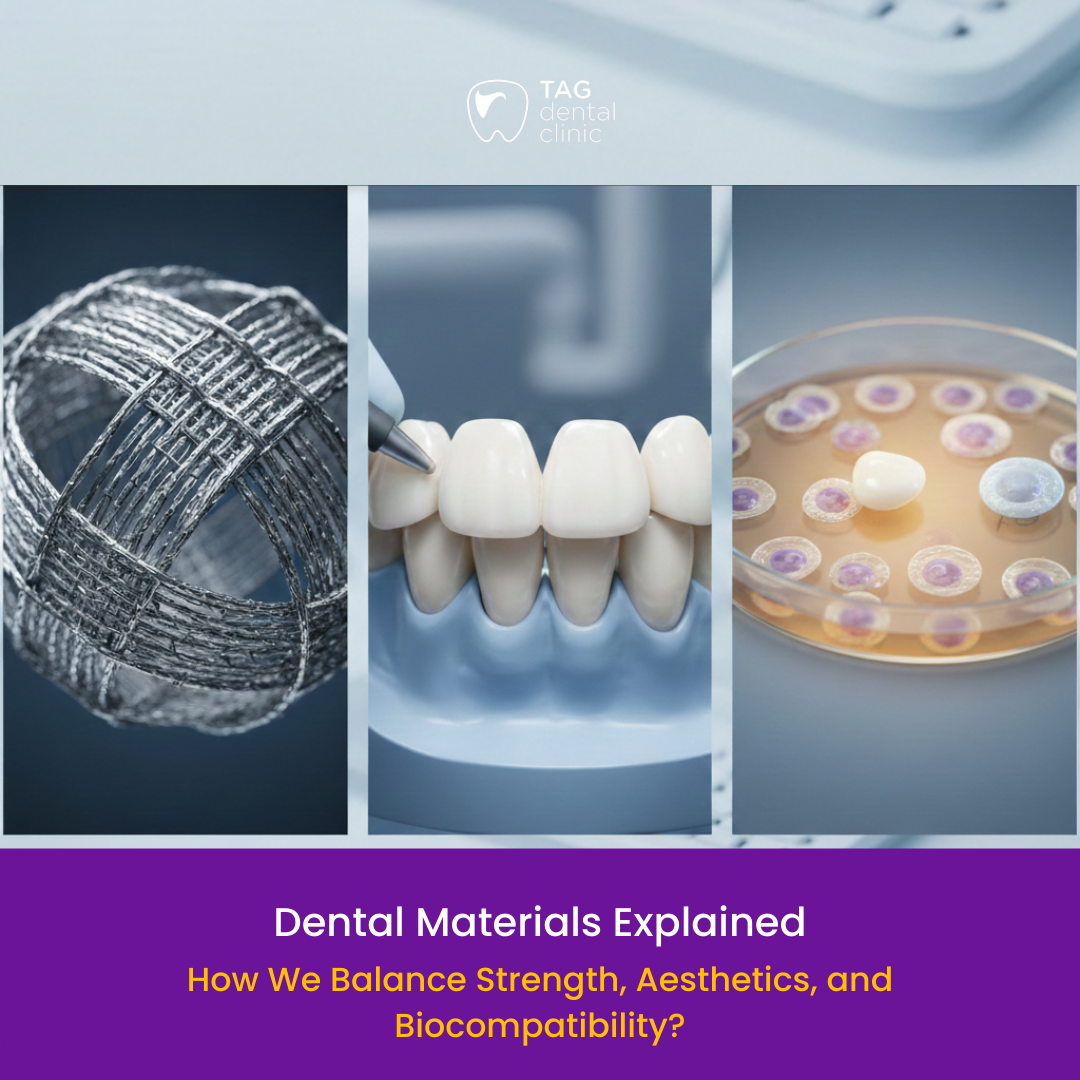
The "best" material depends on the location of the tooth and the patient's bite. Zirconia offers maximum strength for back teeth, E-max Porcelain provides the most natural aesthetics for front teeth, and Composite Resin is ideal for conservative, smaller repairs. Modern dentistry focuses on "biocompatibility"—choosing materials that are gentle on the gums and do not prematurely wear down your opposing natural teeth.
Understanding the "Big Three" Materials
At TAG Dental Clinic in Austin 18, JB, we don't believe in a one-size-fits-all approach. We use high-resolution digital 2D X-rays to assess your tooth's structure before recommending a specific material.
1. Composite Resin: The Conservative Choice
Think of composite as a high-tech "liquid tooth" that we harden with light.
- Best for: Small fillings and minor chips.
- The Advantage: It requires the least amount of tooth removal.
- The Catch: It is more porous and can stain over time if you don't brush 3 times a day.
2. Porcelain (E-max): The Aesthetic Gold Standard
Porcelain mimics the translucency of natural enamel perfectly.
- Best for: Front teeth (the "smile zone").
- The Advantage: It looks identical to a natural tooth and is highly biocompatible with gum tissue.
- The Catch: While strong, it can chip under extreme pressure (like opening a bottle with your teeth).
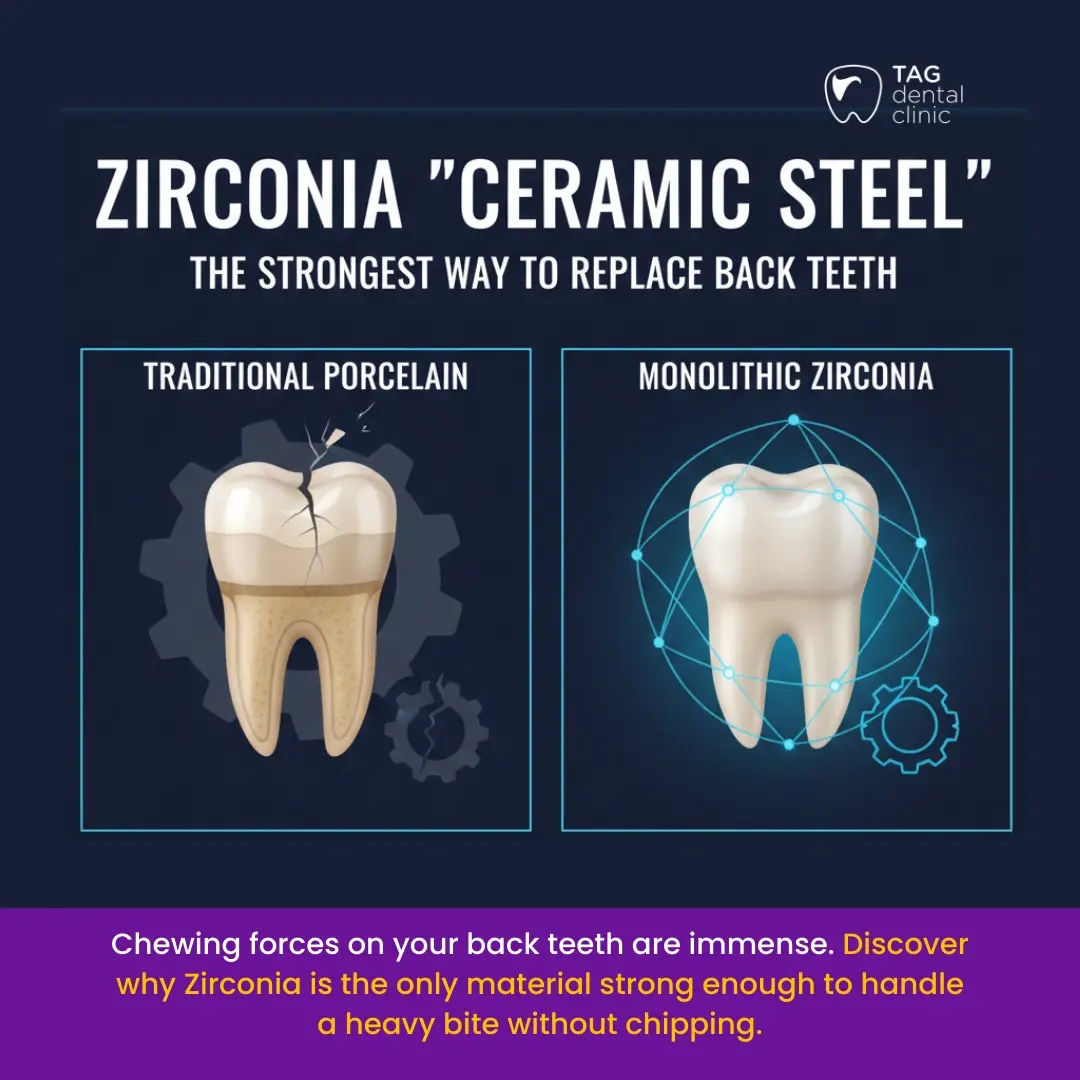
3. Zirconia: The "Ceramic Steel"
Zirconia is an incredibly tough, tooth-colored ceramic.
- Best for: Back teeth where chewing forces are highest.
- The Advantage: Virtually unbreakable.
- The Catch: Because it is so hard, it must be perfectly polished and aligned to prevent it from wearing down the natural teeth it bites against.
Why Stronger Isn't Always Better
A common misconception is that the "hardest" material is the best. However, if a restoration is harder than your natural enamel, it can act like sandpaper, wearing down the healthy teeth on the opposite jaw.
At TAG Dental, we prioritize Balanced Wear. We choose materials that "play nice" with your existing teeth. We also ensure that the fit is perfect using digital 2D X-rays, which provide the high-contrast detail necessary to see how the material sits against your natural tooth structure.
Biocompatibility: Your Gums' Best Friend
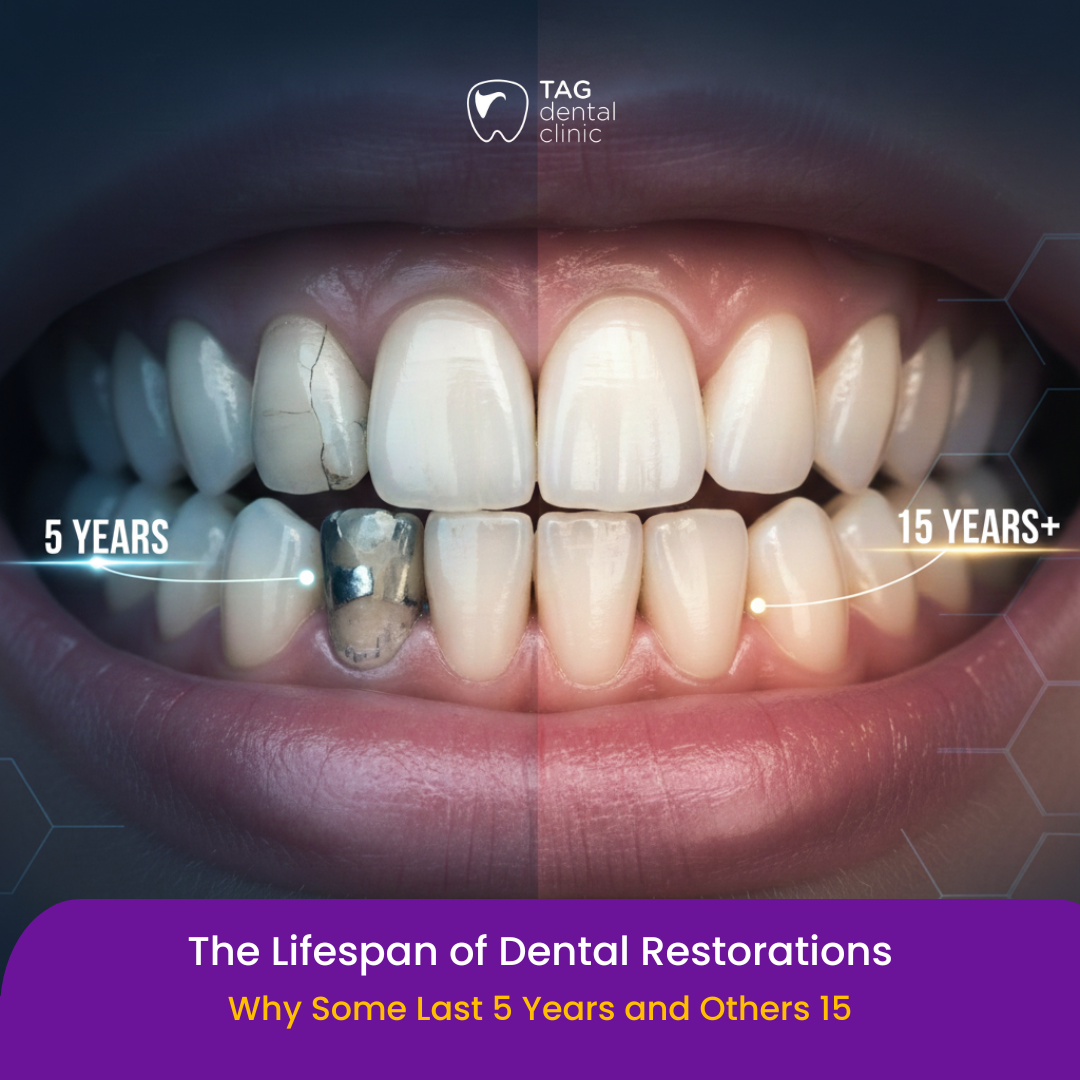
The "hidden" cost of cheap dental materials is gum irritation. High-quality materials like Zirconia and E-max are biocompatible, meaning your body doesn't treat them as a "foreign object." This prevents the "black line" often seen at the gum line of older, metal-based crowns and keeps your breath fresher by reducing bacterial buildup.
Optimize Your Smile with the Right Science
Choosing the right material is a blend of art and engineering. At TAG Dental Clinic, Austin 18, JB, we combine the latest material science with a gentle, patient-centered approach.
Ready to find the perfect fit for your smile?