---
title: Bone & Gum Health Treatments in JB | TAG Dental
description: Why do some dental treatments fail while others last for years? TAG Dental Clinic JB explains the role of healthy bone and gums.
image: https://www.tagdentalclinics.com/hubfs/bone%20and%20gum%20biology.png
---
[Skip to main content](https://www.tagdentalclinics.com/care/bone-and-gums-dental-treatment-jb#main-content)
[](https://www.tagdentalclinics.com/) [](https://www.tagdentalclinics.com/)
- [Home](https://www.tagdentalclinics.com)
- [Services](https://www.tagdentalclinics.com/en/services)
- [Dental Implants](https://www.tagdentalclinics.com/care/dental-implants)
- [Dental Consultation](https://www.tagdentalclinics.com/en/services/#dental-consultation)
- [Dental X-Ray](https://www.tagdentalclinics.com/en/services/#dental-x-ray)
- [Endodontics](https://www.tagdentalclinics.com/en/services/#endodontics)
- [Dental Technology](https://www.tagdentalclinics.com/en/services/#dental-technology)
- [General & Family Dentistry](https://www.tagdentalclinics.com/en/services/#general-family-dentistry)
- [Laser Dentistry](https://www.tagdentalclinics.com/en/services/#laser-dentistry)
- [Nitrous Oxide Sedation](https://www.tagdentalclinics.com/en/services/#nitrous-oxide-sedation)
- [Dental Braces](https://www.tagdentalclinics.com/en/services/#dental-braces)
- [Surgical Dentistry](https://www.tagdentalclinics.com/en/services/#surgical-dentistry)
- [About Us](https://www.tagdentalclinics.com/about-us)
- [Our Team](https://www.tagdentalclinics.com/dentist/dr-moustafa-jb)
- [Blog](https://www.tagdentalclinics.com/care)
- [Contact Us](https://www.tagdentalclinics.com/contact-us)
-
-
en
- [en](https://www.tagdentalclinics.com/care/bone-and-gums-dental-treatment-jb)
[Book Appointment](https://www.tagdentalclinics.com/contact-us)

Welcome to TAG dental Clinic
[ Malaysian Branch](https://www.tagdentalclinics.com)
[ Brazilian Branch](https://www.tagodontologia.com/)

1. [Home](https://www.tagdentalclinics.com/) /
2. [Care](https://www.tagdentalclinics.com/care) /
3. Bone and Gums Biology - Dental Treatments in JB
# Bone and Gums Biology - Dental Treatments in JB
Jan 5, 2026 By Tag Dental
On this page
[T&C apply](https://www.tagdentalclinics.com/privacy-policy)
Practicing Good Oral Hygiene
[Get appointment](https://www.tagdentalclinics.com/contact-us)
## The Biology of Bone and Gums: Why Some Dental Treatments Fail Without Proper Foundation
**Address:** Suite 20-17, Austin 18 Versatile Business Suites, Jalan Austin Perdana 3, Taman Austin Perdana, 81100 Johor Bahru, Johor Darul Ta'zim, Malaysia
**Phone:** [+6011-1111 0660](https://api.whatsapp.com/send?phone=601111110660)
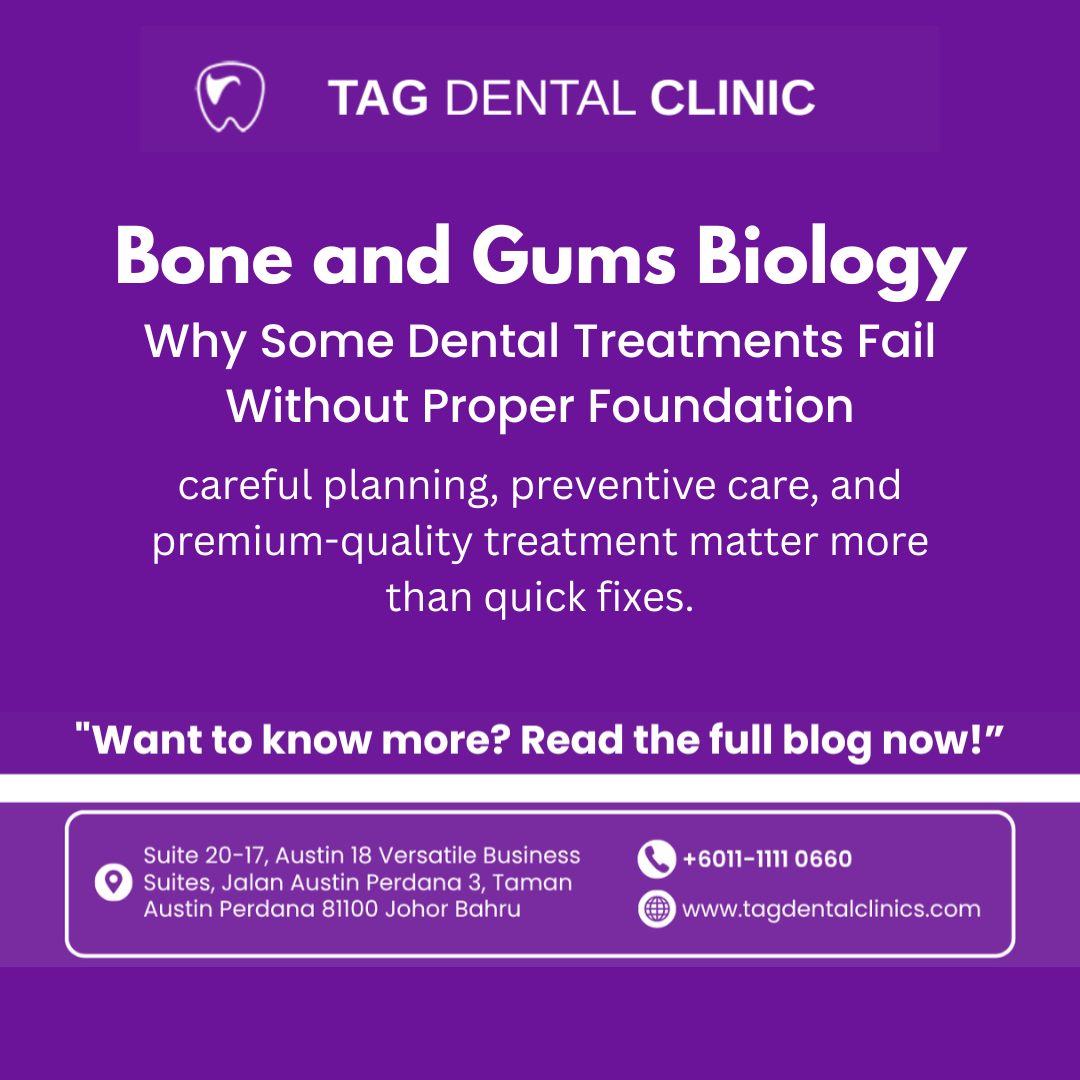
At [TAG Dental Clinic in Johor Bahru](https://share.google/2WD64oRk0mgoC2w5p), patients often ask why some dental treatments last for many years while others fail much sooner than expected. The answer is rarely about the visible tooth alone. Long-term success in dentistry depends on something deeper—the biology of bone and gums that supports every restoration.
Understanding this foundation helps patients appreciate why **careful planning, preventive care, and premium-quality treatment matter more** than quick fixes.
### Bone and Gums: The Silent Support System of Every Smile
Teeth do not stand on their own. They are supported by jawbone and protected by gum tissue that acts as a natural barrier against bacteria. When this biological system is healthy, dental treatments function well, feel comfortable, and look natural.
When bone or gums are compromised, even well-made crowns or bridges can fail over time. This is why experienced clinicians focus on foundation health before moving forward with advanced treatment.
### Bone Remodeling Explained in an Easy Way
Bone is living tissue. It constantly adapts to pressure through a process known as bone remodeling. Chewing sends signals to the jawbone to stay strong and dense. When a tooth is missing, that signal disappears, and the bone slowly shrinks.
This is why untreated tooth loss often leads to:
- Reduced bone volume
- Changes in facial appearance
- Limited future treatment options
Dental implants are designed to restore this stimulation, but only when bone quality is sufficient. When bone loss has progressed, preparatory care becomes essential before moving forward.
---
### How Healthy Gums Protect Teeth and Restorations
Gums are not simply soft tissue around teeth. They form a tight seal that prevents bacteria from reaching the bone underneath. This seal is essential for both natural teeth and restorations.
Healthy gums help:
- Reduce inflammation
- Protect supporting bone
- Improve comfort and longevity of dental work
[When gum health is neglected](https://www.tagdentalclinics.com/care/bleeding-gums), bacteria can travel deeper, causing bone loss that may go unnoticed until damage is advanced.
### Why Bone Quality Matters More Than Tooth Replacement
Replacing a missing tooth is not just about filling a space. The strength and density of the underlying bone determine how well that replacement performs over time.
Strong bone allows restorations to:
- Stay stable under chewing forces
- Maintain proper bite alignment
- Last longer without complications
At TAG Dental Clinic Johor Bahru, treatment planning focuses on evaluating bone support carefully so that restorations are built to last—not just to look good on day one.
---
### Periodontal Health and Its Impact on Implants
[Dental implants](https://www.tagdentalclinics.com/care/dental-implants) rely entirely on bone and gum health. Unlike natural teeth, implants do not have shock-absorbing ligaments, which means the surrounding tissue must be especially stable.
Healthy gums around implants:
- Create a protective biological seal
- Reduce infection risk
- Support long-term comfort and appearance
Poor periodontal health increases the risk of inflammation around implants, which can lead to bone loss if not managed properly.
### Crowns and Bridges Depend on Healthy Foundations Too
[Crowns and bridges](https://www.tagdentalclinics.com/care/dental-crown-and-bridge) attach to natural teeth, and those teeth depend on healthy bone and gums for stability. If periodontal disease is present, restorations may loosen or fail regardless of how well they are made.
Common issues include:
- Gum recession exposing crown edges
- Bone loss around supporting teeth
- Increased sensitivity and discomfort
Addressing gum health first significantly improves long-term outcomes.
---
### Why Daily Oral Care Makes a Bigger Difference Than Most Patients Think
Professional treatment alone is not enough. Daily habits directly influence the health of bone and gums.
Consistent care helps maintain foundation health, including:
- Brushing **three times a day** to reduce plaque buildup
- Gentle cleaning along the gumline
- Regular professional reviews
Good home care reduces inflammation and preserves the biological support needed for premium dental work.
### Why Planning Matters More Than Speed
Modern dentistry offers many advanced solutions, but rushing treatment can compromise biology. Thoughtful planning allows dentists to work within the limits of bone and gum health rather than against them.
In some cases, additional diagnostic steps or referrals for advanced imaging may be required as part of comprehensive planning. This ensures treatment decisions are made responsibly and with long-term success in mind.
---
### [Premium Dental Care](https://www.tagdentalclinics.com/) Is Built on Transparency and Quality
At **TAG Dental Clinic in Johor Bahru**, care is delivered as a **paid, premium service** focused on quality, precision, and long-term value. Dental treatments are carefully planned, fully professional, and never rushed or offered as free services.
This approach allows:
- Better materials and techniques
- More time for proper evaluation
- Higher standards of care and follow-up
While dental insurance handling may not be part of the service model, the emphasis remains on delivering predictable, high-quality outcomes through ethical and transparent care.
### Aesthetics Also Depend on Healthy Bone and Gums
A natural-looking smile depends on more than the tooth surface. Healthy bone maintains facial structure, while healthy gums shape the final appearance of crowns, bridges, and implants.
Strong foundations help:
- Prevent dark gaps near the gums
- Maintain even gum contours
- Ensure restorations blend naturally
This biological stability is what gives premium dentistry its refined, long-lasting results.
### Long-Term Dental Success Starts Beneath the Surface
The most successful dental treatments respect biology. Bone and gums are the quiet support system that determines whether restorations succeed or fail over time.
By prioritizing foundation health, patients benefit from:
- Fewer complications
- Longer-lasting results
- Better comfort and aesthetics
At TAG Dental Clinic [Johor Bahru](https://www.wikidata.org/wiki/Q231318), dentistry is approached as a long-term partnership between professional care and daily habits. A healthy smile is never built on teeth alone—it begins with the biology that supports them.
## Frequently Asked Questions (FAQs) by Dental Patients:
Why do dental treatments fail if the bone and gums are not healthy?
Dental treatments fail because the jawbone and gums provide the structural stability and bacterial protection required for restorations. Without a solid foundation, even high-quality crowns or implants can loosen or become infected due to lack of support or bacterial infiltration.
Can I get a dental implant if I have bone loss?
Yes, but you may require a preparatory procedure such as a bone graft first. Dental implants require a specific volume and density of bone to integrate successfully; if the bone is too thin, the implant will not have the stability needed to withstand chewing forces.
What is bone remodeling and why does it matter?
Bone remodeling is a natural biological process where bone tissue constantly renews itself in response to physical pressure. When a tooth is lost, the lack of chewing stimulation causes the jawbone to stop remodeling and begin shrinking (resorption), which can compromise future dental work.
How do healthy gums protect dental crowns and bridges?
Healthy gums create a tight biological seal around the base of a crown or bridge, preventing food particles and bacteria from reaching the underlying tooth structure. If gums recede or become inflamed, the risk of decay at the restoration's edge increases significantly.
Is periodontal disease reversible before starting restorative work?
Gingivitis (early gum disease) is reversible with professional cleaning and improved hygiene, but advanced periodontitis can only be managed, not fully reversed. It is a strict clinical protocol to stabilize gum health before placing premium restorations to ensure their longevity.
Why is brushing three times a day emphasized for dental restorations?
Brushing three times a day, especially after meals, prevents the formation of plaque biofilm around the margins of your dental work. This habit is critical because restorations like crowns and implants are more vulnerable to bacterial accumulation than natural enamel.
Do dental implants prevent bone loss?
Yes, dental implants are the only restoration that helps preserve jawbone by mimicking the function of a natural tooth root. They send mechanical signals to the bone during chewing, which stimulates the body to maintain bone density and volume.
What are the signs of a failing dental foundation?
Common signs of a compromised foundation include persistent gum bleeding, a metallic taste, visible gum recession, or a slight "shifting" sensation in your crowns or implants. If you notice these, a clinical evaluation of the supporting bone and tissue is necessary.
Why doesn’t TAG Dental Clinic JB offer "quick-fix" dental solutions?
We prioritize biology over speed to ensure patient safety and long-term value. Rushing into permanent restorations without addressing underlying bone or gum issues often leads to premature failure and more expensive corrective surgery later.
Is insurance accepted for these premium dental treatments?
At TAG Dental Clinic Johor Bahru, we provide care as a private, premium service focused on quality and precision. While we do not handle dental insurance directly, we provide transparent, professional documentation that patients may use for their own reimbursement claims where applicable.
## Recent posts
[](https://www.tagdentalclinics.com/care/dental-occlusion)
[Dental Occlusion & Bite Explained | TAG Dental JB](https://www.tagdentalclinics.com/care/dental-occlusion)
[Dental Consultation](https://www.tagdentalclinics.com/care/tag/dental-consultation) [24 hour dentist in jb](https://www.tagdentalclinics.com/care/tag/24-hour-dentist-in-jb) [dental clinic in johor bahru](https://www.tagdentalclinics.com/care/tag/dental-clinic-in-johor-bahru) [oral health](https://www.tagdentalclinics.com/care/tag/oral-health) [dental occlusion](https://www.tagdentalclinics.com/care/tag/dental-occlusion)
Phone: +60 11-1111 0660 Address:Suite 20-17, Austi...
[](https://www.tagdentalclinics.com/care/lifespan-of-dental-restorations)
[How Long Do Dental Restorations Last? | TAG Dental JB](https://www.tagdentalclinics.com/care/lifespan-of-dental-restorations)
[Dental Consultation](https://www.tagdentalclinics.com/care/tag/dental-consultation) [24 hour dentist in jb](https://www.tagdentalclinics.com/care/tag/24-hour-dentist-in-jb) [dental clinic in johor bahru](https://www.tagdentalclinics.com/care/tag/dental-clinic-in-johor-bahru) [oral health](https://www.tagdentalclinics.com/care/tag/oral-health) [Dental Restorations](https://www.tagdentalclinics.com/care/tag/dental-restorations)
Why Some Dental Restorations Last 5 Years and Othe...
[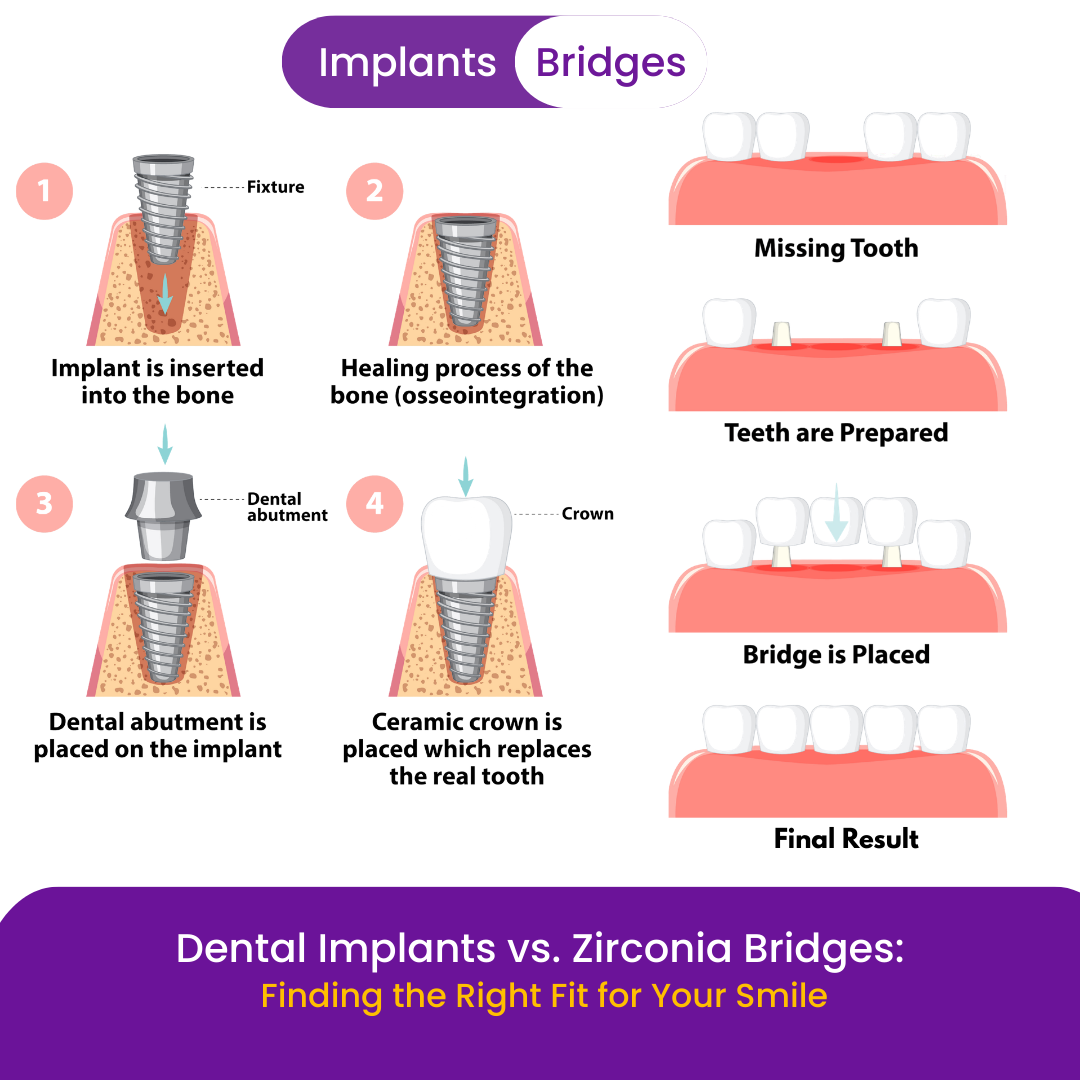](https://www.tagdentalclinics.com/care/dental-implants-vs.-zirconia-bridges)
[Dental Implants vs. Zirconia Bridges | TAG Dental JB](https://www.tagdentalclinics.com/care/dental-implants-vs.-zirconia-bridges)
[Dental implants](https://www.tagdentalclinics.com/care/tag/dental-implants) [Zirconia Bridges](https://www.tagdentalclinics.com/care/tag/zirconia-bridges)
Introduction Finding the Right Fit for Your Smile ...
- **18+**years experience
- **17+**years on implants
- **5+**countries
Dental Implant Provider
## Consult Dr. Moustafa Abdelaziz
MScD Orthodontics · Fellow, World Federation of Orthodontists
With advanced postgraduate implant training and international experience, Dr. Moustafa plans each implant denture case around your bone condition, oral health and smile goals — with a focus on safe, gentle, painless treatment.
- Advanced Dental Implants — Temple University, USA
- MJDF — Royal College of Surgeons, England
- Invisalign Certified
[Book via WhatsApp](https://api.whatsapp.com/send?phone=601111110660) [Book online](https://api.whatsapp.com/send?phone=601111110660)
### Quick links
- [Home](https://www.tagdentalclinics.com)
- [Services](https://www.tagdentalclinics.com/en/services)
- [About us](https://www.tagdentalclinics.com/about-us)
- [Blog](https://www.tagdentalclinics.com/care)
- [Contact us](https://www.tagdentalclinics.com/contact-us)
- [Privacy Policy](https://www.tagdentalclinics.com/privacy-policy)
Copyright 2026, All right reserved.
### Legal Business Name: Moustafa salah group sdn. Bhd.
### Address & Info
Johor Bahru Suite 20-17, Austin 18 Versatile Business Suites, Jalan Austin Perdana 3, Taman Austin Perdana, 81100, Johor Bahru
- [ +6011-1111 0660](https://api.whatsapp.com/send?phone=601111110660)
-  +6011-1111-4224
- [ hello@tagdentalclinics.com](mailto:hello@tagdentalclinics.com)
Copyright 2026, All right reserved.
[](https://api.whatsapp.com/send?phone=601111110660)
```json
{
"@context" : "https://schema.org",
"@type" : "BlogPosting",
"author" : {
"@type" : "Person",
"name" : "Tag Dental",
"url" : "https://www.tagdentalclinics.com/care/author/tag-dental"
},
"dateModified" : "2026-08-07T10:20:44.533Z",
"datePublished" : "2026-01-05T13:21:08.000Z",
"headline" : "Bone & Gum Health Treatments in JB | TAG Dental",
"image" : [ "https://www.tagdentalclinics.com/hubfs/bone%20and%20gum%20biology.png" ],
"mainEntityOfPage" : {
"@id" : "https://www.tagdentalclinics.com/care/bone-and-gums-dental-treatment-jb",
"@type" : "WebPage"
},
"publisher" : {
"@type" : "Organization",
"logo" : {
"@type" : "ImageObject",
"url" : "https://www.tagdentalclinics.com/hubfs/header-logo.png"
}
}
}
```
```json
{
"@context" : "https://schema.org",
"@type" : "BreadcrumbList",
"itemListElement" : [ {
"@type" : "ListItem",
"item" : "https://www.tagdentalclinics.com/",
"name" : "Home",
"position" : 1
}, {
"@type" : "ListItem",
"item" : "https://www.tagdentalclinics.com/care",
"name" : "Care",
"position" : 2
}, {
"@type" : "ListItem",
"item" : "https://www.tagdentalclinics.com/care/bone-and-gums-dental-treatment-jb",
"name" : "Bone & Gum Health Treatments in JB | TAG Dental",
"position" : 3
} ]
}
```
```json
{
"@context": "https://schema.org",
"@type": "FAQPage",
"mainEntity": [
{
"@type": "Question",
"name": "Why do dental treatments fail if the bone and gums are not healthy?",
"acceptedAnswer": {
"@type": "Answer",
"text": "Dental treatments fail because the jawbone and gums provide the structural stability and bacterial protection required for restorations. Without a solid foundation, even high-quality crowns or implants can loosen or become infected due to lack of support or bacterial infiltration."
}
},
{
"@type": "Question",
"name": "Can I get a dental implant if I have bone loss?",
"acceptedAnswer": {
"@type": "Answer",
"text": "Yes, but you may require a preparatory procedure such as a bone graft first. Dental implants require a specific volume and density of bone to integrate successfully; if the bone is too thin, the implant will not have the stability needed to withstand chewing forces."
}
},
{
"@type": "Question",
"name": "What is bone remodeling and why does it matter?",
"acceptedAnswer": {
"@type": "Answer",
"text": "Bone remodeling is a natural biological process where bone tissue constantly renews itself in response to physical pressure. When a tooth is lost, the lack of chewing stimulation causes the jawbone to stop remodeling and begin shrinking (resorption), which can compromise future dental work."
}
},
{
"@type": "Question",
"name": "How do healthy gums protect dental crowns and bridges?",
"acceptedAnswer": {
"@type": "Answer",
"text": "Healthy gums create a tight biological seal around the base of a crown or bridge, preventing food particles and bacteria from reaching the underlying tooth structure. If gums recede or become inflamed, the risk of decay at the restoration's edge increases significantly."
}
},
{
"@type": "Question",
"name": "Is periodontal disease reversible before starting restorative work?",
"acceptedAnswer": {
"@type": "Answer",
"text": "Gingivitis (early gum disease) is reversible with professional cleaning and improved hygiene, but advanced periodontitis can only be managed, not fully reversed. It is a strict clinical protocol to stabilize gum health before placing premium restorations to ensure their longevity."
}
},
{
"@type": "Question",
"name": "Why is brushing three times a day emphasized for dental restorations?",
"acceptedAnswer": {
"@type": "Answer",
"text": "Brushing three times a day, especially after meals, prevents the formation of plaque biofilm around the margins of your dental work. This habit is critical because restorations like crowns and implants are more vulnerable to bacterial accumulation than natural enamel."
}
},
{
"@type": "Question",
"name": "Do dental implants prevent bone loss?",
"acceptedAnswer": {
"@type": "Answer",
"text": "Yes, dental implants are the only restoration that helps preserve jawbone by mimicking the function of a natural tooth root. They send mechanical signals to the bone during chewing, which stimulates the body to maintain bone density and volume."
}
},
{
"@type": "Question",
"name": "What are the signs of a failing dental foundation?",
"acceptedAnswer": {
"@type": "Answer",
"text": "Common signs of a compromised foundation include persistent gum bleeding, a metallic taste, visible gum recession, or a slight "shifting" sensation in your crowns or implants. If you notice these, a clinical evaluation of the supporting bone and tissue is necessary."
}
},
{
"@type": "Question",
"name": "Why doesn’t TAG Dental Clinic JB offer "quick-fix" dental solutions? ",
"acceptedAnswer": {
"@type": "Answer",
"text": "We prioritize biology over speed to ensure patient safety and long-term value. Rushing into permanent restorations without addressing underlying bone or gum issues often leads to premature failure and more expensive corrective surgery later."
}
},
{
"@type": "Question",
"name": "Is insurance accepted for these premium dental treatments?",
"acceptedAnswer": {
"@type": "Answer",
"text": "At TAG Dental Clinic Johor Bahru, we provide care as a private, premium service focused on quality and precision. While we do not handle dental insurance directly, we provide transparent, professional documentation that patients may use for their own reimbursement claims where applicable."
}
}
]
}
```