Introduction: The Hidden Reason Some Patients Can’t Get Implants
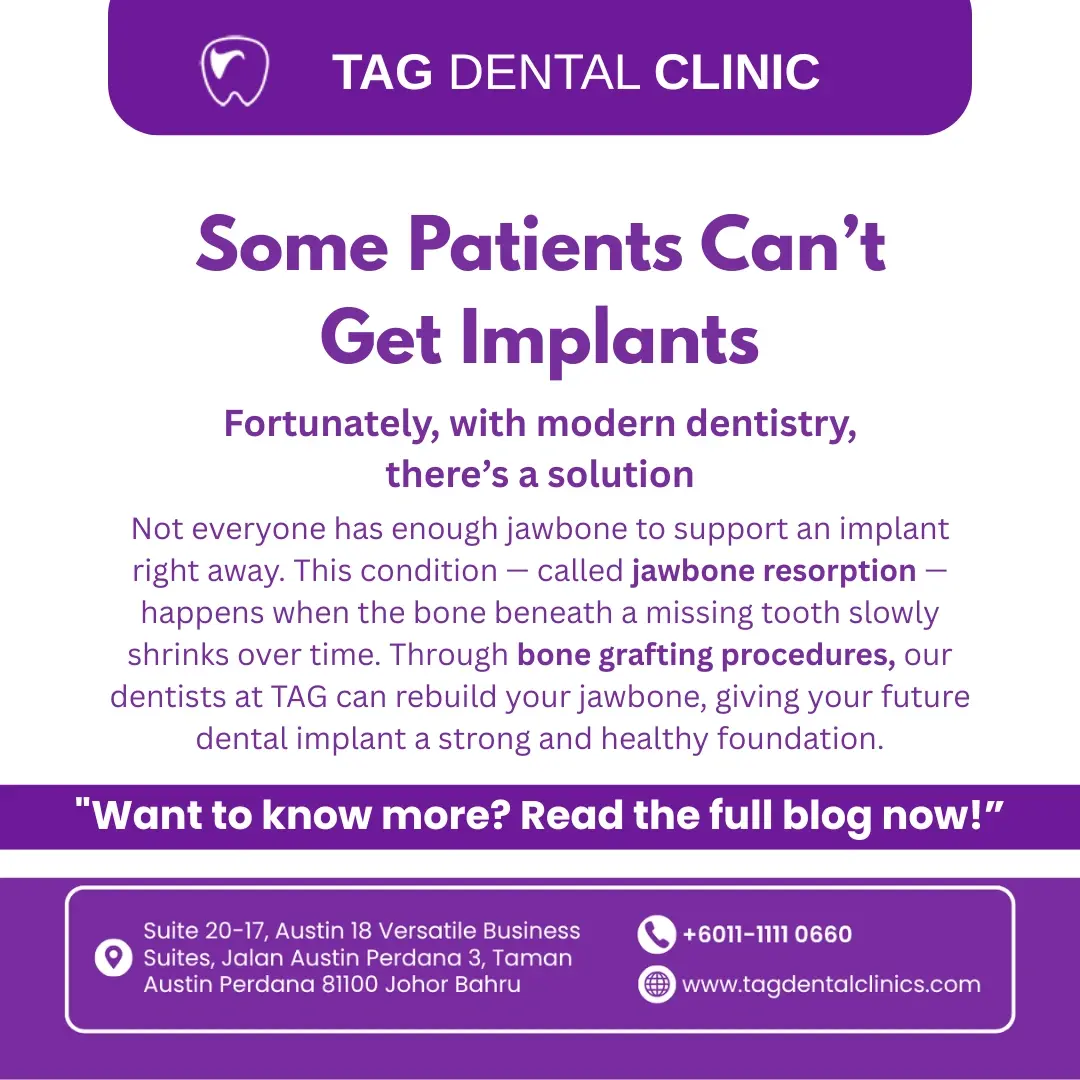
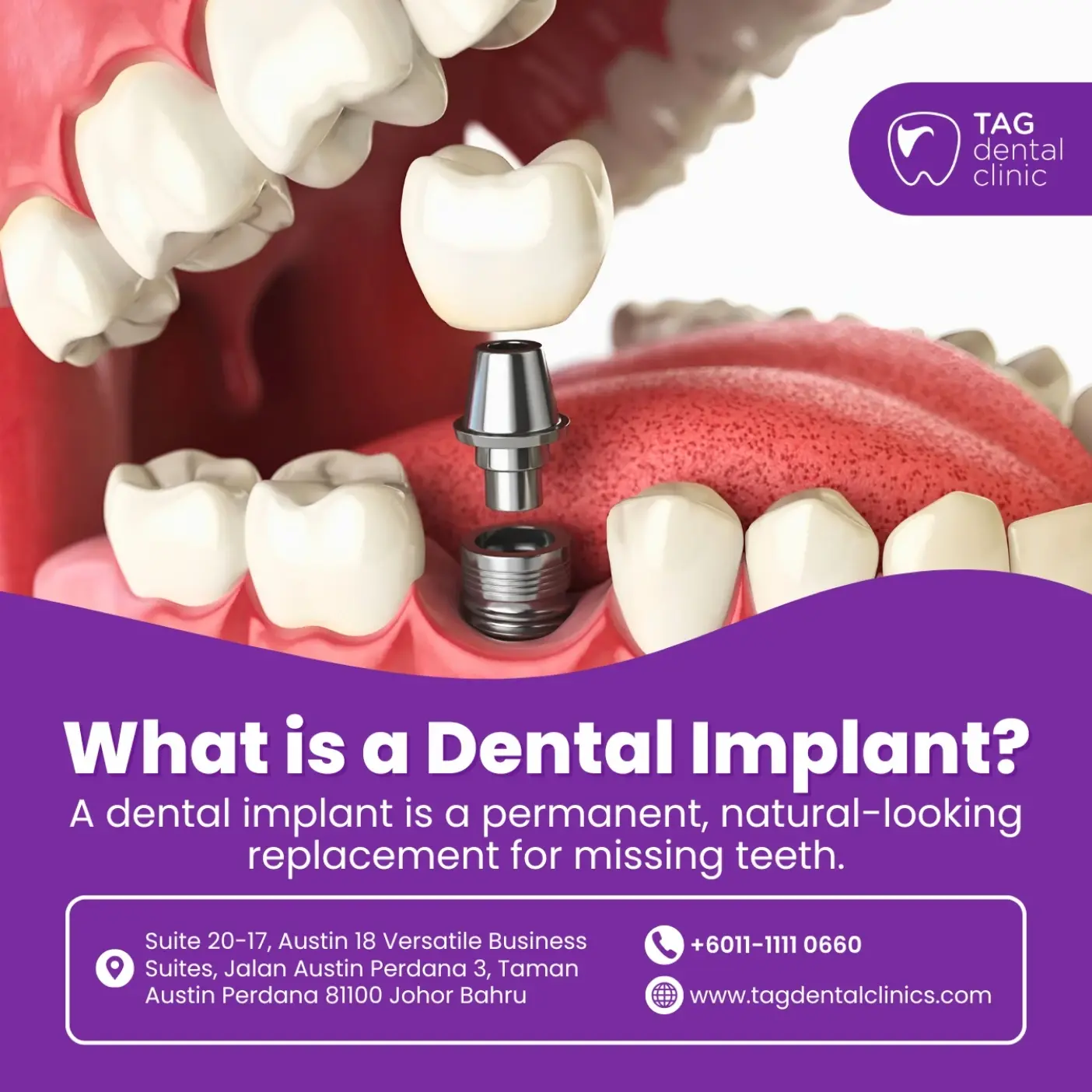
Dental implants are one of the most effective and long-lasting solutions for missing teeth. However, many patients who visit TAG Dental Clinic in Johor Bahru (JB) are surprised to learn that not everyone has enough jawbone to support an implant right away.
This condition — called jawbone resorption — happens when the bone beneath a missing tooth slowly shrinks over time. Without enough bone support, even the best-quality implant won’t stay stable.
Fortunately, with modern dentistry, there’s a solution. Through bone grafting procedures, our dentists in JB can rebuild your jawbone, giving your future dental implant a strong and healthy foundation.
Why Does the Jawbone Shrink?
The jawbone depends on tooth roots for stimulation. When a tooth is lost or extracted, the bone in that area stops receiving pressure from chewing, leading to gradual bone loss.
Common Causes of Jawbone Shrinkage:
- Missing teeth left untreated for a long time
- Periodontal (gum) disease destroying bone tissue
- Injury or trauma to the jaw or teeth
- Ill-fitting dentures causing friction and bone wear
- Tooth extraction without socket preservation
- Age-related bone loss due to natural resorption
Over time, this can cause:
- A sunken facial appearance
- Loose-fitting dentures or bridges
- Difficulty in implant placement without grafting
What Is Bone Grafting?
Bone grafting is a regenerative dental procedure that replaces and rebuilds lost bone tissue. It prepares your jaw to securely hold a dental implant, ensuring stability, strength, and long-term success.
During a bone graft, natural or synthetic bone material is placed in the deficient area. Over time, your body’s own bone cells integrate with it, creating new, healthy bone.
Types of Bone Grafting Procedures Explained Simply
At TAG Dental Clinic JB, we personalize each treatment based on how much bone loss has occurred and where it is located. Below are the most common and effective grafting methods used to prepare patients for dental implants.
1. Socket Preservation (After Tooth Extraction)
When a tooth is extracted, the surrounding bone begins to shrink almost immediately.Socket preservation is done right after the extraction — a small amount of bone graft material is placed into the empty tooth socket.
Purpose:
- Prevents bone collapse after extraction
- Maintains bone height and width for future implant placement
Best For:
- Patients planning for dental implants a few months after extraction
2. Ridge Augmentation
If a tooth has been missing for a long time, the jaw ridge — the bony area that holds the teeth — may become too thin or uneven.
Ridge augmentation involves adding bone graft material to widen and strengthen the ridge.
Benefits:
- Restores natural jaw shape
- Creates enough bone width for implant placement
- Improves aesthetics, especially in front teeth
Best For:
- Patients with long-term bone loss or thin jaw ridges
3. Sinus Lift (for Upper Jaw Implants)
For upper back teeth, the jawbone can be very close to the sinus cavity. When the bone here is too thin, a sinus lift (or sinus augmentation) is performed.
During this procedure, the sinus membrane is gently lifted, and bone graft material is added below it to increase bone height.
Purpose:
- Creates enough bone support for upper jaw implants
- Prevents implants from penetrating the sinus cavity
Best For:
- Patients missing upper molars or premolars
- Those with bone loss due to age or long-term tooth absence
Bone Graft Materials Used in Dentistry
Bone grafts can come from different sources, depending on your condition and preferences:
| Type |
Source |
Key Benefit |
| Autograft |
Your own bone (from another area of the mouth) |
Natural integration and low rejection risk |
| Allograft |
Donor bone from a tissue bank |
Safe and biocompatible |
| Xenograft |
Bone from an animal source (often bovine) |
Excellent structure and stability |
| Alloplast |
Synthetic bone graft material |
Completely safe and sterile |
Your dentist in Johor Bahru will help choose the best type based on your medical history and treatment plan.
How Long Does Bone Grafting Take to Heal?
Healing time depends on the type and size of the graft.
- Small socket preservation grafts: 2–3 months
- Ridge augmentation or sinus lift: 4–6 months
Once healed, the bone will be ready for dental implant placement, ensuring long-lasting results.
Do Bone Grafts Hurt?
Not at all — bone grafting is a painless and safe procedure performed under local anesthesia. At TAG Dental Clinic JB, we focus on patient comfort and use gentle techniques for minimal post-surgery discomfort.
After the procedure, mild soreness can occur, but it typically resolves in a few days with proper care.
Maintaining Bone Health After Grafting
To keep your bone strong and ensure successful implant placement:
- Brush three times a day with a soft-bristled brush
- Eat a balanced diet rich in calcium and vitamins
- Avoid smoking or alcohol during healing
- Attend regular dental check-ups at your trusted dental clinic in JB
The TAG Dental Clinic JB Promise
At TAG Dental Clinic in Johor Bahru, we understand that every patient’s bone and dental health are unique. Our experienced dentists create personalized bone grafting plans to rebuild strength, restore structure, and prepare you for a confident new smile.
We focus on:
- Safe, modern bone regeneration techniques
- Transparent communication about healing and costs
- Long-term success and patient comfort
Your smile deserves a strong foundation — and that starts with healthy bone.
Conclusion: A Strong Foundation for a Lasting Smile
Dental implants are only as strong as the bone that supports them. For patients with bone loss, bone grafting is the key to restoring both function and confidence.
At TAG Dental Clinic JB, we specialize in safe and effective bone grafting procedures — from sinus lifts to ridge augmentation — ensuring that every implant has a solid, healthy base.
If you’ve been told you don’t have enough bone for an implant, don’t lose hope. With today’s advanced techniques, our dentists in Johor Bahru can help you rebuild your foundation and restore your smile beautifully.