





On this page

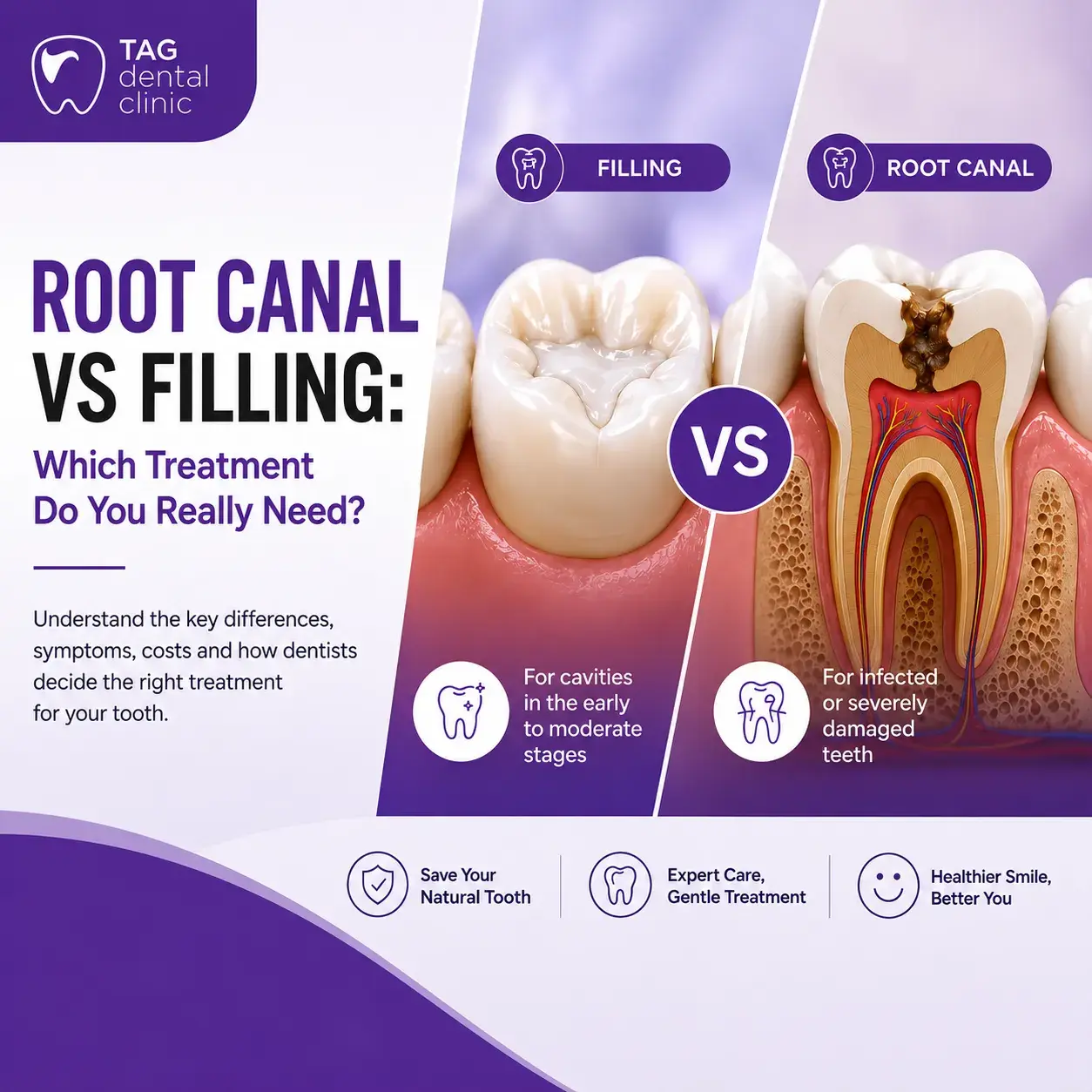
If you're experiencing tooth pain, one of the first questions you may ask is:
"Do I need a filling, or do I need a root canal?"Although both treatments repair damaged teeth, they are designed to treat different levels of decay. Understanding the difference can help you seek treatment before the problem becomes more serious—and more expensive.
At TAG Dental Clinic, we always aim to preserve your natural tooth whenever possible. That's why we perform a thorough examination before recommending the most suitable treatment.
What Is a Dental Filling?
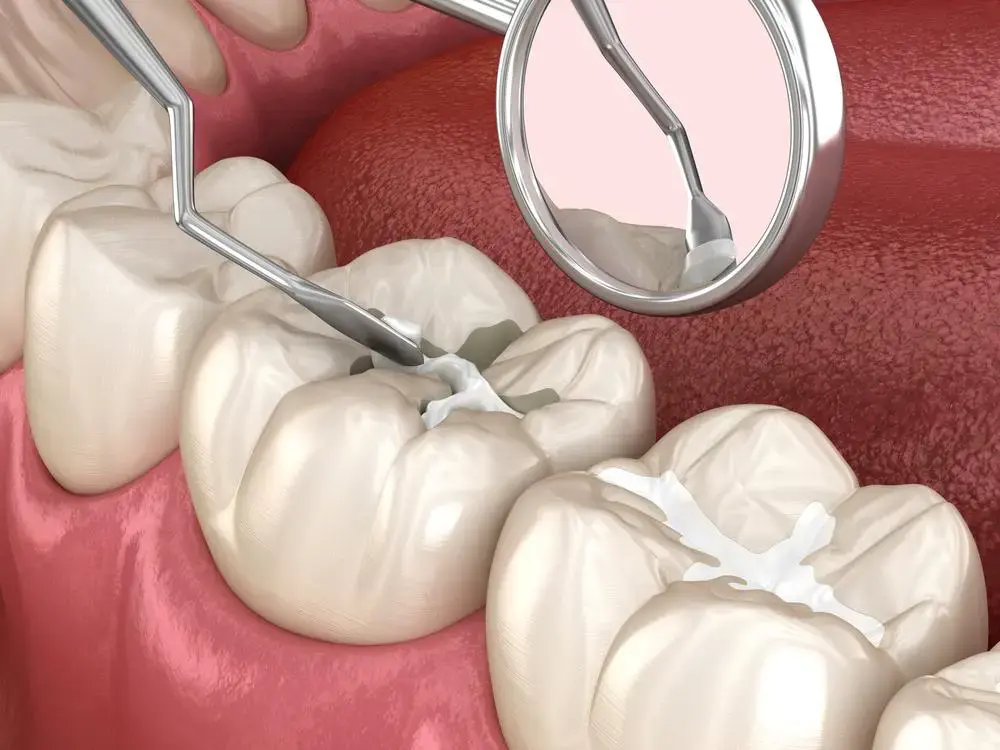
A dental filling is used to repair a tooth affected by early to moderate tooth decay.
During the procedure, the decayed portion of the tooth is carefully removed and replaced with a tooth-coloured filling material. The filling restores the tooth's shape, strength, and function while preventing further decay.
A filling is usually recommended when:
- The cavity is still relatively small.
- The tooth's nerve (pulp) remains healthy.
- Pain is mild or only occurs occasionally.
- There is no infection inside the tooth.
Most fillings can be completed in a single visit.
What Is a Root Canal?
A root canal treatment becomes necessary when decay or injury has reached the inner pulp of the tooth.
Inside every tooth is a soft tissue called the pulp, which contains nerves and blood vessels. When bacteria infect this area, the infection cannot heal on its own.
During a root canal procedure, your dentist:
- Removes the infected pulp.
- Cleans and disinfects the root canals.
- Seals the canals to prevent reinfection.
- Usually recommends placing a dental crown afterwards to strengthen the tooth.
Root canal treatment allows patients to save their natural tooth instead of having it extracted.

Signs You May Only Need a Filling
Many cavities can still be treated with a simple filling if detected early.
Common signs include:
- Mild sensitivity to sweets.
- Occasional discomfort when eating.
- Small visible holes or dark spots.
- Food getting trapped between teeth.
- No spontaneous pain.
Early treatment is usually simpler, faster, and less costly.
Signs You May Need a Root Canal
When decay progresses deeper into the tooth, symptoms often become more noticeable.
You may require a root canal if you experience:
- Persistent toothache.
- Pain that keeps you awake at night.
- Lingering sensitivity to hot or cold.
- Swelling around the gums.
- Pain when biting.
- A pimple-like bump on the gum.
- Darkening or discoloration of the tooth.
However, some infected teeth cause little or no pain, making regular dental check-ups essential.
Why Not Every Toothache Requires a Root Canal
Many patients assume that severe pain automatically means they need a root canal.
In reality, tooth pain can also be caused by:
- A deep cavity.
- A cracked filling.
- Gum disease.
- Teeth grinding.
- Tooth fractures.
- Sinus pressure.
Only a clinical examination and dental X-rays can determine the true cause.
Can a Filling Turn Into a Root Canal?
Yes.
If a cavity is left untreated, bacteria continue to spread deeper into the tooth.
What begins as a small filling today could eventually require:
- Root canal treatment
- A dental crown
- Or, in severe cases, tooth extraction.
This is why early diagnosis is so important.
Which Treatment Hurts More?
One of the biggest misconceptions is that root canals are painful.
With modern local anaesthesia and dental techniques, both fillings and root canal treatments are generally comfortable procedures.
In fact, many patients report that the pain they experienced before treatment was far worse than the treatment itself.
Which Treatment Costs More?
A filling is generally less expensive because it treats a smaller area of damage.
A root canal involves:
- Cleaning infected canals.
- Multiple treatment steps.
- More chair time.
- Often a dental crown afterwards.
Although root canal treatment costs more initially, it is usually much more affordable than replacing a lost tooth with a dental implant or bridge.
How Dentists Decide Between a Filling and a Root Canal
At TAG Dental Clinic, every diagnosis is based on a careful clinical assessment.
Your dentist will evaluate:
- The depth of the cavity.
- Dental X-rays.
- The health of the tooth's nerve.
- Your symptoms.
- The long-term prognosis of the tooth.
Our priority is always to preserve as much healthy tooth structure as possible.
Can You Avoid a Root Canal?
Often, yes.
The best way to avoid root canal treatment is to detect cavities early.
Simple habits can significantly reduce your risk:
- Brush twice daily with fluoride toothpaste.
- Floss every day.
- Reduce sugary snacks and drinks.
- Visit your dentist every six months.
- Treat small cavities before they become large infections.
Final Thoughts
The difference between a filling and a root canal comes down to how far the decay has progressed.
A filling treats a tooth before the nerve becomes infected, while a root canal is designed to save a tooth after the infection has reached the pulp.
If you're experiencing tooth pain, sensitivity, or notice signs of decay, seeking treatment early can often mean a simpler procedure and a better long-term outcome.
At TAG Dental Clinic, our experienced dentists will carefully assess your condition, explain your options clearly, and recommend the treatment that's best for your oral health.
Recent posts
When You Need One and Why It’s Not as Scary as You...

If you're considering dental implants, you've prob...

Protecting Your Smile Investment Dental veneers ar...
