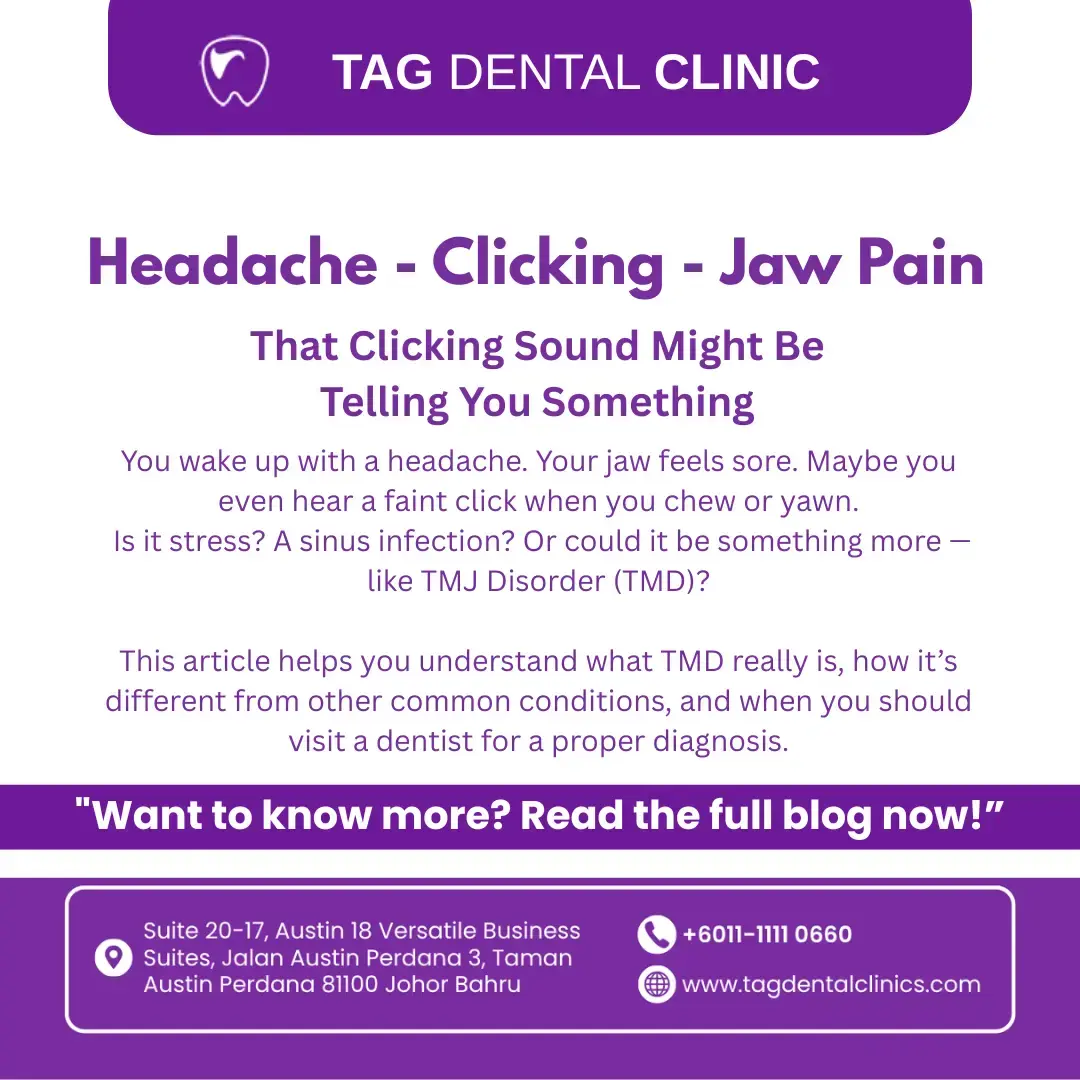
Introduction: That Clicking Sound Might Be Telling You Something
You wake up with a headache. Your jaw feels sore. Maybe you even hear a faint click when you chew or yawn. Is it stress? A sinus infection? Or could it be something more — like TMJ Disorder (TMD)?
At TAG Dental Clinic in Johor Bahru (JB), we frequently see patients who’ve spent months treating “migraines” or “sinus pressure,” only to discover the real problem lies in their jaw joint.
This article helps you understand what TMD really is, how it’s different from other common conditions, and when you should visit a dentist in JB for a proper diagnosis.
What Exactly Is TMJ (TMD)?
Your TMJ (temporomandibular joint) connects your lower jaw to your skull, just in front of your ears
It’s responsible for essential movements like chewing, talking, and yawning.
When this joint becomes strained, inflamed, or misaligned, it leads to TMD — Temporomandibular Disorder
Common symptoms of TMD include:
- Clicking, popping, or grating sound when opening or closing your mouth
- Jaw stiffness or pain when chewing or yawning
- Headaches, especially around the temples
- Ear pain or a feeling of fullness in the ears
- Pain radiating to the neck, shoulders, or face
- Difficulty opening your mouth fully
Because the TMJ area shares nerves with your ears, sinuses, and skull, it’s easy to confuse TMD with other health issues
TMD vs. Other Common Conditions: How to Tell the Difference
Many patients mistake TMD symptoms for migraines, sinus infections, or ear problems. Here’s how to distinguish them:
1. TMD vs. Migraine Headaches
| Symptom |
TMD |
Migraine |
| Pain Location |
Jaw joint, temple, or behind ears |
One side of the head or around the eyes |
| Triggers |
Jaw movement, chewing, stress, teeth grinding |
Light, sound, certain foods, hormonal changes |
| Sound/Clicking |
Common when opening mouth |
Not present |
| Relief |
Resting jaw, gentle massage |
Quiet dark room, migraine medication |
Key Clue: If your headache increases when you chew, talk, or yawn — it’s more likely TMD, not a migraine.
2. TMD vs. Sinus Infections
| Symptom |
TMD |
Sinus Infection |
| Pain Location |
Jaw joint or side of face |
Forehead, cheeks, behind eyes |
| Other Symptoms |
Jaw clicking, limited opening |
Nasal congestion, fever, thick discharge |
| Timing |
Worsens with jaw movement |
Worsens when lying down or bending forward |
| Duration |
Chronic or recurring |
Usually short-term (1–2 weeks) |
Key Clue: If you feel pressure or clicking around your jaw but no nasal congestion — it’s more likely TMD.
3. TMD vs. Ear Problems
| Symptom |
TMD |
Ear Infection/Issue |
| Ear Pain |
Common, due to shared nerves |
Common, often sharp pain |
| Hearing Changes |
Mild fullness feeling |
Reduced hearing or fluid discharge |
| Jaw Movement |
Increases discomfort |
No effect |
| Additional Signs |
Clicking or popping jaw |
Fever or ear drainage possible |
Key Clue: If your ear “hurts” but your hearing is normal and there’s no infection — your TMJ joint could be the culprit.
Common Causes of TMD
TMD often develops from a combination of habits, lifestyle factors, or jaw misalignment. Common causes include:
- Teeth grinding (bruxism) during sleep
- Jaw clenching due to stress or anxiety
- Misaligned bite or uneven chewing pressure
- Previous jaw trauma or injury
- Arthritis affecting the jaw joint
- Poor posture that strains neck and jaw muscles
At TAG Dental Clinic JB, we use a detailed consultation process to identify not just the symptoms — but the underlying cause of your jaw discomfort.
How Dentists Diagnose TMJ Disorders
If you suspect TMD, visiting a dentist in Johor Bahru is the first and most accurate step. Here’s how we typically diagnose the condition at TAG Dental Clinic JB:
- Detailed Symptom Review
We discuss when your pain started, where it’s located, and what triggers it.
- Physical Examination
We gently feel your jaw joint while you open and close your mouth.
Listen for clicking, popping, or grinding sounds.
- Bite and Muscle Evaluation
We check for signs of str teeth grinding or misaligned bite patterns.
Muscles of your face, neck, and shoulders are examined for tenderness.
- Exclusion of Other Conditions
If symptoms resemble sinus or ear issues, we coordinate care with ENT specialists for cross-diagnosis.
(Note: TAG Dental Clinic does not use 3D imaging or scans — our diagnosis relies on physical and clinical evaluation.)
Treatment Options for TMJ Disorders
Depending on the cause and severity, treatment may include:
1. Bite Adjustment and Night Guards
Custom-made dental guards protect your teeth from grinding and reduce strain on the jaw joint during sleep.
2. Relaxation and Jaw Exercises
Gentle stretches, massage, and controlled movement techniques help relax tight muscles.
3. Medication Support
Over-the-counter pain relief or muscle relaxants may be recommended short-term.
4. Lifestyle and Posture Changes
Avoid resting your chin on your hand, chew evenly on both sides, and manage stress effectively.
5. Regular Dental Checkups
At TAG Dental Clinic JB, we track your progress and adjust treatment to ensure gradual, lasting relief.
Daily Tips to Relieve Jaw Pain at Home
- Apply a warm compress to ease muscle tightness.
- Avoid chewy foods like gum or tough meats.
- Keep teeth slightly apart (don’t clench unconsciously).
- Practice good posture, especially when using digital devices.
- Brush 3 times a day and maintain overall oral hygiene to prevent secondary jaw stress.
Listen to Your Jaw — It Might Be Speaking for Your Health
Persistent headaches, jaw clicking, or ear discomfort shouldn’t be ignored. While they might seem minor, these symptoms can reveal underlying TMJ Disorder (TMD) that, when diagnosed early, responds well to simple, non-invasive care.
At TAG Dental Clinic in Johor Bahru (JB), our experienced dentists provide careful evaluation, gentle treatment, and ongoing support — helping you live pain-free and smile confidently again.